

THE METHOD
Embodied Voice Breathwork®
Breath is only the beginning.
Embodied Voice Breathwork® is an integrative breathwork method weaving Conscious Connected Breath, pranayama and breath retention, vocal expression, sound, somatic awareness and nervous-system regulation into an embodied journey of awareness, expression and connection.
THE METHOD
Breath opens the door.
The body, voice and presence take us deeper.
What is Embodied Voice Breathwork®?
Embodied Voice Breathwork® is an integrative method that brings together conscious breathing, vocal expression, sound, somatic awareness and nervous-system responsiveness within one experiential practice.
Rather than approaching breath as an isolated technique, the method invites you to notice what is happening throughout the whole body. Breath may become movement. Sensation may become sound. Sound may become expression. Moments of activation may be followed by stillness, grounding and integration.
The practice is not about forcing a particular emotional release or achieving a specific state. It is about creating the conditions to listen more deeply and respond to what is actually happening within you.

BREATHWORK 101
What is breathwork?
Breathwork is an umbrella term for practices that intentionally change or bring awareness to the way we breathe.
Some forms are slow and subtle. Others are rhythmic or activating. Some come from ancient yogic traditions such as pranayama, while contemporary approaches include practices such as Conscious Connected Breathwork.
What they share is the intentional use of something we normally do automatically: the breath.
Because breathing interacts with respiratory chemistry, heart rate, attention, emotion and the autonomic nervous system, changing the way we breathe can change the way we feel and experience the present moment.
But not all breathwork has the same effect.
Slower isn't always better. Deeper isn't always better. More intense isn't always better. Different breathing practices create different physiological and subjective experiences.
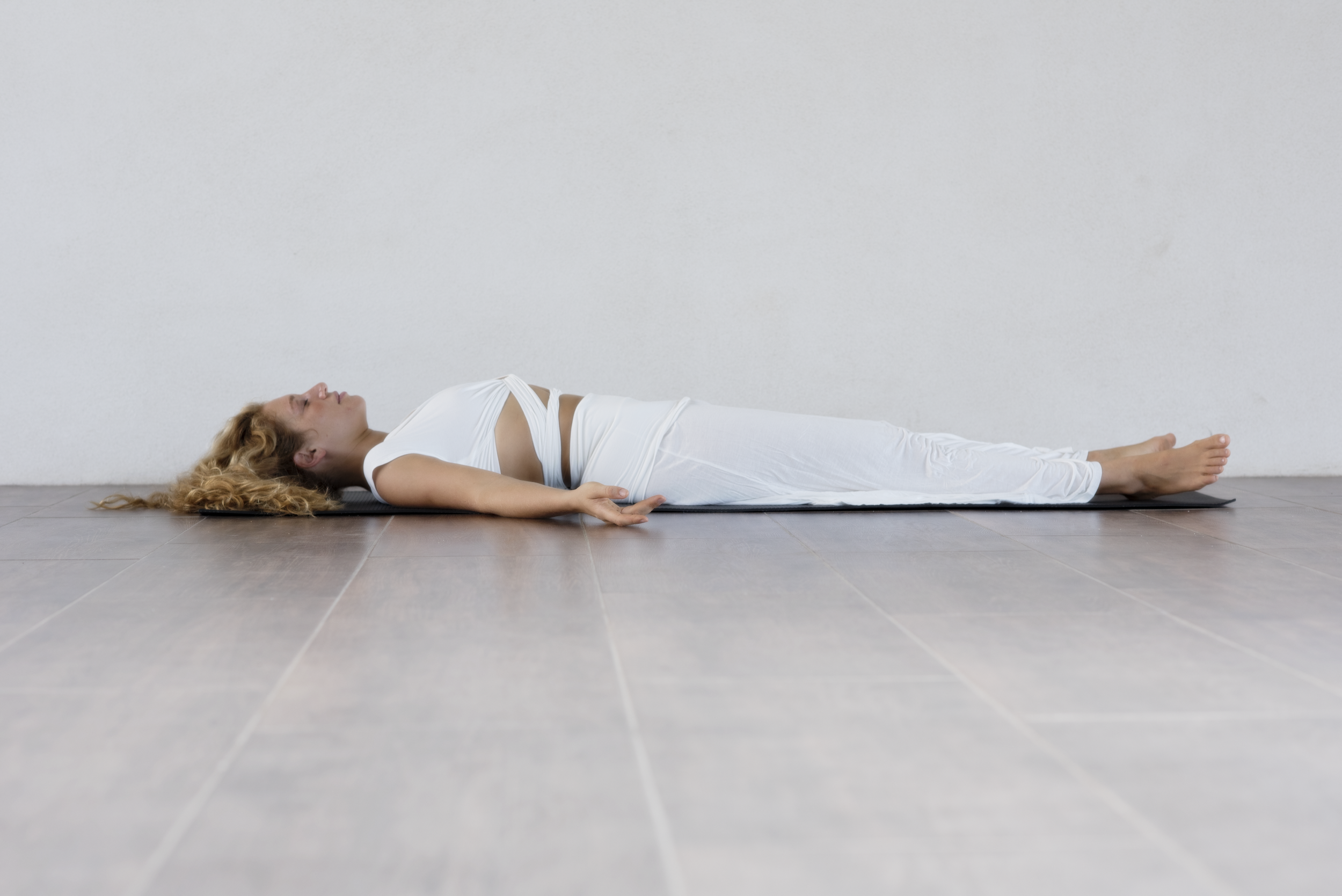
BREATHWORK ISN'T ONE TECHNIQUE
From slow diaphragmatic breathing and traditional pranayama to rhythmic breathing, breath retention and Conscious Connected Breathwork, the pattern, pace, depth and duration of the breath all matter.
THE BREATH
What is Conscious Connected Breathwork?
Conscious Connected Breathwork is a rhythmic breathing practice in which the inhale and exhale are connected in a continuous cycle, with little or no intentional pause between them.
Sustained connected breathing can create noticeable changes in sensation, attention and perception. People may experience tingling, temperature changes, muscular sensations, shifts in emotion, altered awareness or simply a heightened sense of connection with the body.
Within Embodied Voice Breathwork®, Conscious Connected Breath is not used as a race toward intensity.
The breath is an invitation, not a demand.
The pace, depth and duration can be adapted in response to the individual, and periods of activation may be interwoven with sound, movement, slower breathing, stillness and integration.
THE PAUSE
The spaces between breaths matter, too.
KUMBHAKA
Alongside continuous breathing, Embodied Voice Breathwork® draws from yogic pranayama practices that include kumbhaka, or intentional breath retention.
A breath hold changes the respiratory pattern again, creating a different physiological and subjective experience from continuous connected breathing.
CO₂, O₂ + pH
During more vigorous breathing, increased ventilation can reduce carbon dioxide in the blood. Because carbon dioxide plays an important role in acid-base balance, this can temporarily raise blood pH, a state known as respiratory alkalosis.
During breath retention, carbon dioxide begins to rise again as the body continues metabolizing oxygen.
The chemistry of breathwork is more nuanced than simply “getting more oxygen.”
THE NERVOUS SYSTEM
Breath can change state.
Breathing is unusual because it happens automatically, yet we can also consciously change it. That gives the breath a unique relationship with the autonomic nervous system. Different breathing patterns can influence arousal, attention and bodily state. Slower breathing may support settling and parasympathetic activity, while faster or more activating practices can temporarily increase arousal.
Within Embodied Voice Breathwork®, the intention isn't to remain permanently calm.
It is to develop greater capacity to notice, experience and respond.
ACTIVATE
Energy · sensation · expression
NOTICE
Breath · body · emotion
INTEGRATE
Slowing · grounding · rest
“Regulation isn't the absence of activation. It is the capacity to move through different states with greater awareness and responsiveness.”
THE VOICE
When breath becomes expression.
Voice is woven throughout Embodied Voice Breathwork® not as performance, but as another way of meeting the body.
Humming, toning, sighing, mantra, intuitive sound and vocal expression can all become extensions of the exhale, offering another way to explore sensation, emotion and expression.
You do not need to be a singer. There is no “good” voice required.
For many people, allowing themselves to make sound can reveal something deeper: where they hold back, where they feel self-conscious, where expression comes naturally and what it feels like to take up space with their own voice.
“The invitation isn't to sound beautiful.
It's to discover what happens when you allow yourself to be heard.”

THE SOUND
Music is part of the journey.
Music and sound help shape the emotional architecture of an Embodied Voice Breathwork® experience.
Recorded music, rhythm, silence and live instrumentation may be woven throughout a session to support different moments of the journey: arriving, building energy, opening expression, creating spaciousness and eventually returning toward rest and integration.
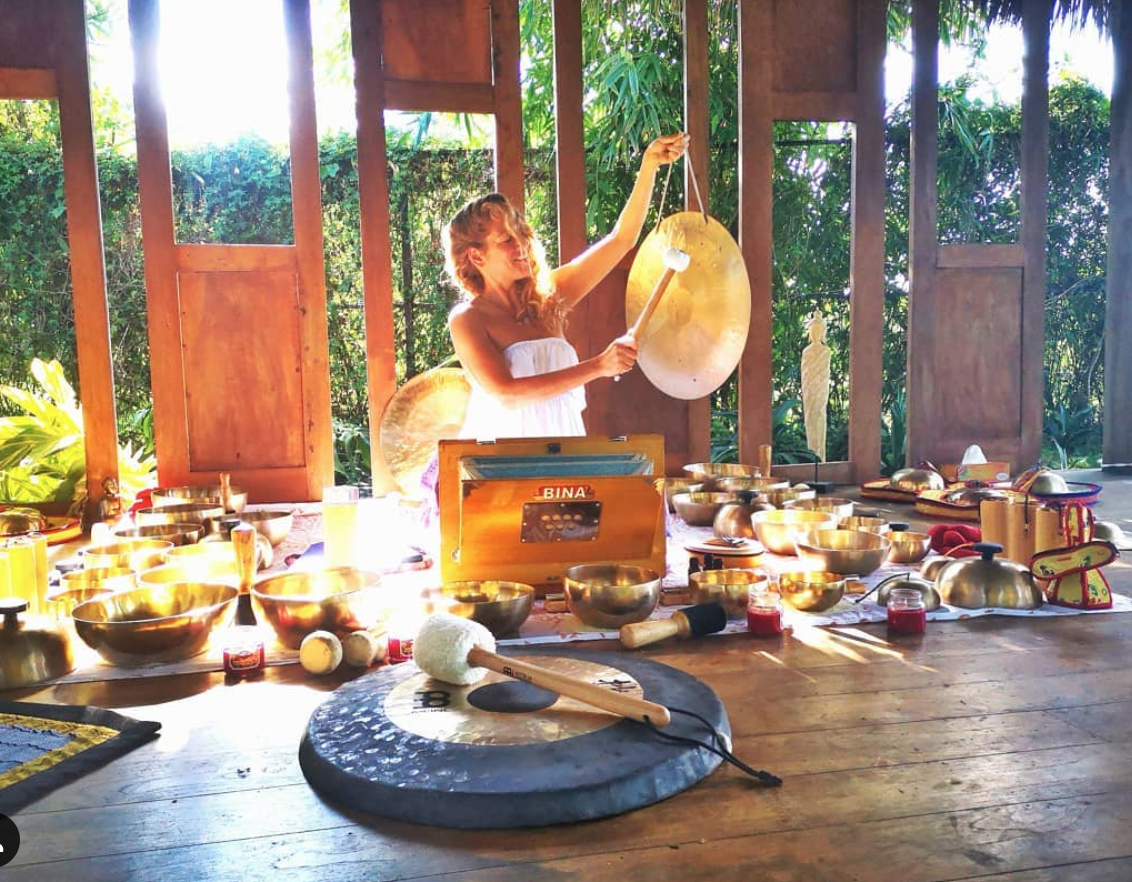
Fern may work with voice, harmonium, singing bowls, percussion, mantra and other live sound practices depending on the experience and the people in the room.
“Sound isn't simply something playing behind the breath. It becomes part of the conversation.”
ROOTS + LINEAGE
A contemporary method with many roots.
Embodied Voice Breathwork® is a contemporary method, but it did not emerge in isolation.
My approach has been shaped by more than 15 years of study, practice and teaching across breathwork, yoga, sound, somatic and embodied traditions. Each has influenced the way I understand the breath, the body, the voice and the art of holding space.
Rather than reproducing any one tradition, Embodied Voice Breathwork® brings these influences into a methodology I have developed and refined through years of working with students, clients and facilitators.
YOGIC BREATH
Pranayama · Kumbhaka
Hatha + Kundalini Yoga
CONNECTED BREATH
Rebirthing Breathwork
Conscious Connected Breathwork
BODY + SOMATICS
Somatic awareness
Movement · Thai Yoga Therapy
VOICE + SOUND
Vocal activation · Mantra
Sound practices · Live music
ENERGY + PRESENCE
Meditation · Embodied awareness
Intuitive + energetic practices
Honoring the roots while allowing the work to evolve.
Some of the practices that inform Embodied Voice Breathwork® have histories reaching back centuries, while others emerged through modern breathwork and somatic movements.
I hold an important distinction between the traditions I have studied and learned from, and the method I have created from my own years of practice and teaching.
Embodied Voice Breathwork® is not presented as an ancient lineage. It is a contemporary, integrative methodology informed by these roots and continually refined through experience.

THE ORIGIN
A method that grew through practice.
I didn't sit down one day and decide to invent a new kind of breathwork.
Embodied Voice Breathwork® emerged gradually through years of my own practice, healing, study and teaching. As I explored different approaches to breath, yoga, sound, movement and embodiment, I became increasingly interested in what happened when these practices were allowed to speak to one another.
I noticed that breath could open a door, but sometimes the body wanted to move. Sometimes the exhale wanted to become sound. Sometimes what was needed wasn't more intensity, but less. Sometimes music could carry a person somewhere words could not. And sometimes the most powerful thing I could do as a facilitator was become quiet and listen.
Over years of working with students and clients, these observations began to form a methodology of their own.
Embodied Voice Breathwork® grew from that listening.
It brings together the structure of technique with the responsiveness of embodied practice, creating space for breath, voice, sound, movement and stillness to become part of the same conversation.
The method continues to evolve through practice, study, teaching and the people who experience it.
THE SCIENCE
What we know. And what we're still learning.
Breathwork is both ancient in practice and relatively young as a field of modern scientific research.
We know a great deal about the physiology of breathing itself, and a growing body of research is beginning to explore how intentional breathing practices may influence stress, mood, autonomic function and subjective states of consciousness. At the same time, different forms of breathwork can produce very different effects, and the evidence is stronger for some practices than others.
I believe both things can be true: breathwork can be profoundly experiential, and we can remain thoughtful and honest about what science has, and has not yet, established.
01 — THE NERVOUS SYSTEM
Breathing changes physiology.
Breathing is closely linked with cardiovascular and autonomic activity. Slow voluntary breathing in particular has been extensively studied and is associated with changes in heart-rate variability and cardiorespiratory dynamics related to parasympathetic activity.
Different breathing patterns, however, do different things. More activating forms of breathwork can temporarily increase arousal rather than simply making the body calmer.
This is one reason Embodied Voice Breathwork® works with both activation and integration rather than treating “relaxation” as the only desirable state.
02 — CO₂ + ALTERED STATES
The chemistry of the breath matters.
During sustained, more vigorous circular breathing, ventilation can increase enough to reduce carbon dioxide. This shifts blood chemistry toward temporary respiratory alkalosis and can contribute to sensations and changes in perception experienced during intensive breathwork.
A 2025 study that included Conscious Connected Breathwork found that decreases in end-tidal CO₂ were associated with the emergence and depth of altered states during circular breathwork. Interestingly, the experience could remain deep even as CO₂ began returning toward baseline, suggesting that physiology is important but may not tell the whole story.
Breathwork isn't simply about bringing more oxygen into the body.
03 — STRESS + EMOTIONAL WELL-BEING
The evidence is promising—and still developing.
A 2023 meta-analysis of randomized controlled trials found that breathwork interventions were associated with small-to-moderate improvements in self-reported stress, anxiety and depressive symptoms. However, the researchers also emphasized limitations in the quality of the existing evidence and cautioned against allowing enthusiasm to move ahead of the science.
And research doesn't always produce a simple positive answer. A large placebo-controlled study of coherent breathing found improvement over time in both groups, but no specific advantage for the slower breathing condition over its active breathing comparison.
Promising doesn't mean proven. Emerging doesn't mean unimportant.
04 — CONSCIOUS CONNECTED BREATH
The practice itself is beginning to be studied.
Until recently, much of the breathwork literature focused on slower breathing techniques rather than Conscious Connected Breathwork specifically.
That is beginning to change.
A recent randomized controlled trial involving 107 adults examined six weekly 90-minute online Conscious Connected Breathwork sessions and found a significantly greater reduction in anxiety scores in the breathwork group than in a waitlist control group. The study is encouraging, but it represents an emerging evidence base rather than definitive proof of a therapeutic effect.
Combined with newer physiological research into circular breathwork, this gives us an increasingly interesting picture of how sustained connected breathing may influence both physiology and subjective experience.
AND WHAT ABOUT THE VOICE?
Sound is physiological, too.
Research into vocalization is much smaller than the broader breathing literature, but there are intriguing findings.
Humming has been shown to markedly increase nasal nitric oxide during the humming exhalation, apparently through increased gas exchange between the nasal cavity and paranasal sinuses. This is a fascinating physiological effect, although it should not be turned into broader claims that humming “detoxifies,” “heals,” or universally stimulates the vagus nerve.
Research has also examined relationships among singing, breathing and cardiac autonomic activity, and a 2026 study found that toning and slow breathing produced overlapping but distinct neural and cardiorespiratory responses—an especially interesting area for future research.
For me, the value of voice isn't dependent on proving that every vocal experience has a specific biological mechanism. Voice is also expression, communication, sensation, creativity and relationship.
That is very important philosophically.
Science is one way of listening.
Research helps us understand mechanisms, measure outcomes and question assumptions. Lived experience gives us another kind of information: what someone notices in their body, how their relationship with their breath changes, what happens when they allow themselves to make sound, and what they carry with them after the experience is over.
Embodied Voice Breathwork® respects both.
The science matters. The experience matters. And there is still much for us to learn.
Research & References
Effect of Breathwork on Stress and Mental Health: A Meta-Analysis of Randomised-Controlled Trials
Scientific Reports, 2023
Meta-analysis examining breathwork in relation to stress, anxiety and depressive symptoms. The authors found promising effects while emphasizing the need for higher-quality research.Effects of Voluntary Slow Breathing on Heart Rate and Heart Rate Variability: A Systematic Review and Meta-Analysis
Neuroscience & Biobehavioral Reviews, 2022
Large systematic review and meta-analysis examining slow breathing and heart-rate variability, including measures associated with parasympathetic cardiac activity.Decreased CO₂ Saturation During Circular Breathwork Supports Emergence of Altered States of Consciousness
Communications Psychology, 2025
Particularly relevant to Embodied Voice Breathwork®: researchers studied both Conscious Connected and Holotropic breathwork and found that reductions in end-tidal CO₂ correlated with the emergence of altered states during circular breathing.Efficacy of Online Conscious Connected Breathwork in Reducing Symptoms of Anxiety: A Randomized Waitlist Control Trial
Journal of Affective Disorders, 2026
Randomized study of 107 adults participating in six weekly Conscious Connected Breathwork sessions. The breathwork group showed a significantly greater reduction in anxiety scores than the waitlist control.Effect of Coherent Breathing on Mental Health and Wellbeing: A Randomised Placebo-Controlled Trial
Scientific Reports, 2023
A useful counterbalance in the literature: this large study compared slow coherent breathing with an active breathing control, helping illustrate why breathwork research needs careful controls rather than assuming every observed improvement comes from a particular breathing rate.Humming Greatly Increases Nasal Nitric Oxide
American Journal of Respiratory and Critical Care Medicine, 2002
A small physiological study showing a substantial increase in measured nasal nitric oxide during humming compared with quiet exhalation, apparently related to increased gas exchange between the sinuses and nasal cavity.Neural and Cardiorespiratory Responses in Vocalization and Slow Breathing: Contrasting Brain and Autonomic Responses
PLOS ONE, 2026
Especially interesting for the Embodied Voice component: researchers compared toning and singing with breathing-only conditions and found overlapping but distinct neural and cardiorespiratory responses.

EXPERIENCE THE METHOD
Where will the breath take you?
Embodied Voice Breathwork® can be experienced as a personal journey, explored through private online mentorship, or learned more deeply through facilitator training with me in Costa Rica.
Wherever you begin, the invitation is the same: to listen more deeply to your breath, your body and your voice, and discover what becomes possible when you allow them to speak to one another.
Facilitator Training in Costa Rica
Learn to confidently guide Embodied Voice Breathwork® through an intimate, highly personalized in-person training and certification.
EXPLORE FACILITATOR TRAINING →
Online Foundations + Private Mentorship
Spend eight weeks exploring the foundations of Embodied Voice Breathwork® through personal 1:1 mentorship from wherever you are.