
The Science of Breathwork: How Your Breath Regulates Your Nervous System
Understanding the physiology behind breathwork and why it is one of the most powerful tools for healing, stress regulation, and emotional balance.
Introduction
Breathwork is often spoken about in spiritual or emotional terms.
But there is also a strong physiological foundation behind why it works.
Your breath is one of the few functions in the body that is both automatic and voluntary. This means you can consciously influence systems in your body that are usually outside of your control.
This includes your nervous system.
Understanding how breathwork affects your nervous system helps you move from simply practicing breathwork to truly trusting it.
The Nervous System and Why It Matters
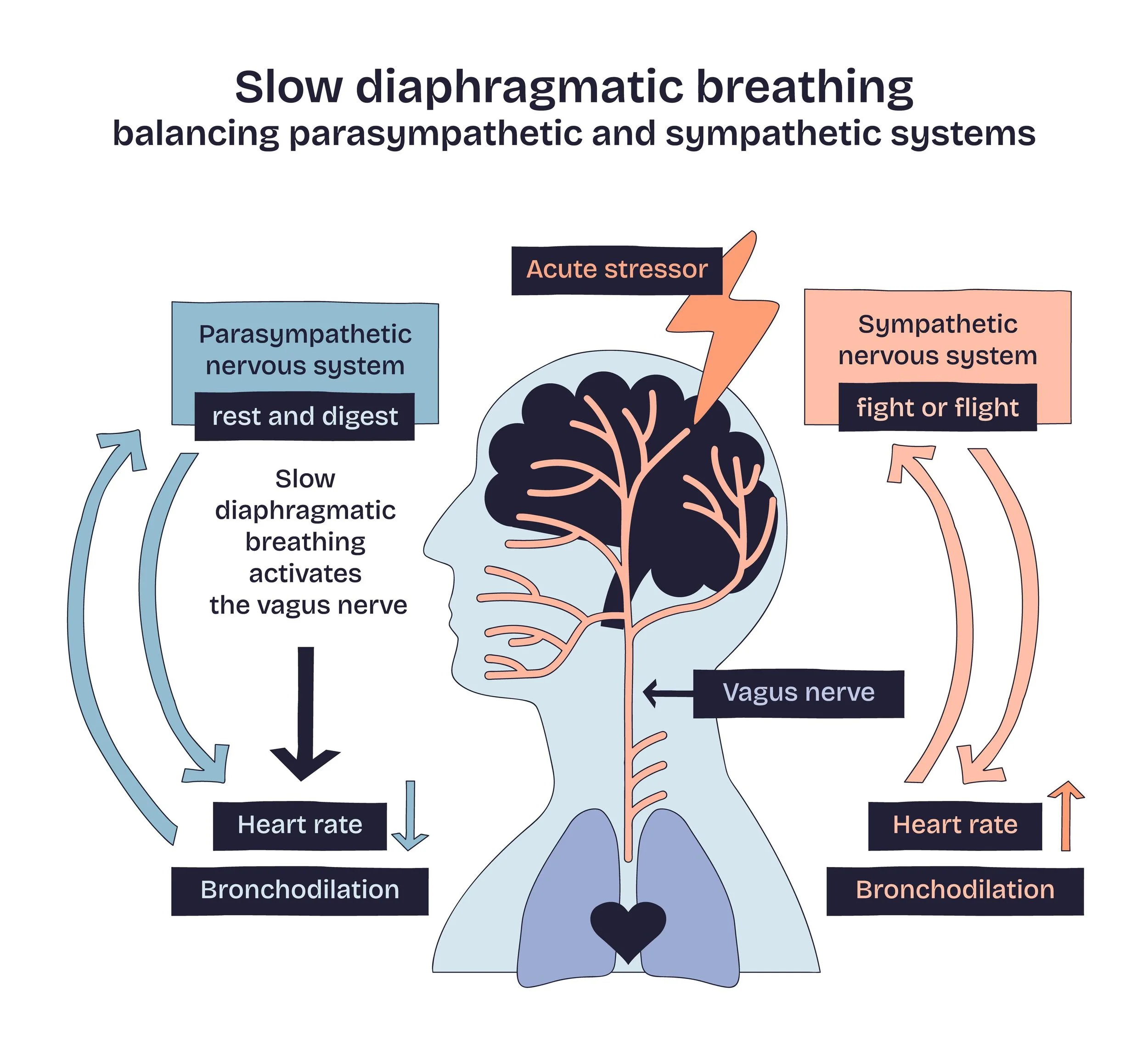
Your nervous system is constantly scanning for safety or threat.
It operates through two primary branches:
Sympathetic Nervous System
This is your fight or flight response.
It activates when your body perceives stress or danger and prepares you to react.
Parasympathetic Nervous System
This is your rest and digest state.
It supports relaxation, healing, digestion, and recovery.
Many people today live in a chronic low level state of sympathetic activation.
This can show up as:
Anxiety or overwhelm
Difficulty relaxing
Poor sleep
Emotional reactivity
Chronic tension in the body
The key to healing is not eliminating stress, but learning how to regulate your nervous system and return to balance.
How the Breath Regulates the Nervous System
Your breath acts as a direct bridge to your nervous system.
When you change the way you breathe, you send signals to your body about whether it is safe or under threat.
Slow, Deep Breathing
Activates the parasympathetic nervous system
This helps:
Lower heart rate
Reduce stress hormones
Promote relaxation
Faster, Rhythmic Breathing
Activates the sympathetic nervous system
This can:
Increase energy
Bring suppressed emotions to the surface
Support release and activation
Practices like conscious connected breathwork intentionally move between these states to create a cycle of activation and release.
If you are new to this, read what is conscious connected breathwork to understand how this pattern works in practice.
The Role of the Vagus Nerve
One of the key players in nervous system regulation is the vagus nerve.
It connects the brain to major organs throughout the body and plays a central role in the parasympathetic nervous system.
Breathwork stimulates the vagus nerve, especially through:
Slow exhales
Deep diaphragmatic breathing
Vocal expression and sound
This is one reason why practices that combine breath and voice, such as Embodied Voice Breathwork®, can be so effective.
They support regulation not only through breathing, but through vibration and sound.
Why Breathwork Can Access Stored Emotions
The body stores stress and emotional experiences when they are not fully processed.
This is often referred to as somatic memory.
Breathwork works on this level by:
Increasing oxygen and energy flow
Activating the nervous system in a controlled way
Allowing the body to complete stress cycles
During sessions, this may look like:
Emotional release such as crying or laughter
Physical sensations like tingling or warmth
Spontaneous insights or memories
This is not random.
It is the body processing and releasing what has been held.
The Science Behind Breath Retention and Energy
In practices like Kundalini pranayama, breath retention plays an important role.
Holding the breath can:
Increase carbon dioxide tolerance
Improve oxygen efficiency in the body
Heighten awareness and focus
This creates a unique internal environment where both physiological and energetic changes can occur.
If you want to explore this more deeply, read Kundalini pranayama explained.
Why Consistency Matters
Like any form of training, the benefits of breathwork increase with consistency.
Over time, regular practice can:
Improve baseline nervous system regulation
Increase resilience to stress
Enhance emotional stability
Support long term mental clarity
This is why many people choose to deepen their practice through structured environments like breathwork training in Costa Rica, where they can fully immerse and integrate the work.
A Professional and Evidence Informed Approach
As breathwork continues to grow in popularity, it is important to distinguish between casual practice and professional facilitation.
I am a Certified Professional Breathwork Practitioner with over 400 hours of training through the Global Professional Breathwork Alliance, which is dedicated to maintaining high standards of safety, ethics, and professionalism in the field.
This foundation ensures that the practices taught within Embodied Voice Breathwork® are grounded not only in experience, but in responsible and informed facilitation.
Bridging Science and Experience
The science explains how breathwork works.
But the true understanding comes through experience.
When you feel your body shift from tension to relaxation
When your breath softens and your mind becomes clear
When emotions move and release without force
That is where the science becomes real.
Final Thoughts
Your breath is always with you.
It is one of the most accessible and powerful tools you have to regulate your nervous system and support your overall well being.
When used intentionally, it becomes more than just a function of survival.
It becomes a tool for healing, awareness, and transformation.