
How to Become a Certified Breathwork Facilitator Step by Step Guide
How to Become a Certified Breathwork Facilitator: A Step by Step Guide - A clear path from personal practice to professional facilitation, rooted in safety, embodiment, and purpose.
Learn how to become a certified breathwork facilitator with this step by step guide. Discover training, certification, and career paths.
If you feel called to guide others through healing, presence, and transformation, becoming a breathwork facilitator may be the path you are looking for.
This work is growing rapidly as more people seek tools for nervous system regulation, emotional healing, and deeper self connection.
But becoming a facilitator is not only about learning techniques.
It is about developing the awareness, responsibility, and embodiment required to hold space for others in a safe and effective way.
This guide will walk you through exactly how to become a certified breathwork facilitator and what to look for in a high quality training.
Step 1: Begin With Your Own Practice
Every skilled facilitator starts as a student of the breath.
Before guiding others, you need to experience the work within yourself.
This includes building a consistent personal practice and exploring modalities such as conscious connected breathwork.
Through your own sessions, you begin to understand:
How the breath affects your body and emotions
What activation and release feel like
How your nervous system responds to different techniques
If you are new to this, start with our guide on what is conscious connected breathwork to build your foundation.
Step 2: Understand the Scope of the Work
Breathwork is powerful because it works directly with the nervous system and emotional body.
This means facilitation requires more than enthusiasm.
You are working with:
Emotional release
Trauma responses
Altered states of awareness
Group energy dynamics
A professional training will teach you how to navigate these safely and responsibly.
Step 3: Choose a High Quality Training Program
Not all breathwork trainings are created equal.
Choosing the right program is one of the most important decisions you will make.
Look for a training that includes:
Trauma informed facilitation
Nervous system education
Supervised practice and feedback
Clear structure and methodology
Integration support
Professional standards matter.
I am a Certified Professional Breathwork Practitioner with over 400 hours of training through the Global Professional Breathwork Alliance, an organization dedicated to promoting ethics, safety, and rigor in breathwork education.
This level of training ensures that facilitation is grounded, responsible, and aligned with best practices.
At Embodied Voice Breathwork®, these standards are woven into every aspect of the training experience.
Step 4: Learn Core Facilitation Skills
A comprehensive training will teach you both the technical and intuitive aspects of facilitation.
This includes:
Breath Techniques
Learning how to guide different breathing patterns for activation, release, and regulation.
Nervous System Awareness
Understanding how to recognize and respond to stress, overwhelm, or shutdown in participants.
Holding Space
Developing the ability to stay present, grounded, and non reactive while others move through their experience.
Communication and Cueing
Learning how to guide sessions clearly and effectively.
Safety and Ethics
Knowing when to support, when to pause, and when to refer out.
Step 5: Practice in a Supported Environment
Facilitation is a skill that develops through experience.
During training, you will have opportunities to:
Practice guiding sessions
Receive feedback from experienced facilitators
Observe others and learn from different styles
This stage builds confidence and helps you refine your presence and leadership.
Step 6: Integrate Complementary Modalities
Many modern breathwork trainings include additional tools that deepen the experience.
These may include:
Kundalini pranayama techniques for energy activation
Voice activation and sound
Somatic healing practices
Meditation and embodiment work
These modalities allow you to offer more nuanced and impactful sessions.
You can explore how energy based practices work in Kundalini pranayama explained.
Step 7: Complete Certification and Begin Facilitating
Once you complete your training, you will receive certification and be ready to begin facilitating.
Many facilitators start by:
Offering sessions to friends or small groups
Hosting local workshops
Building an online presence
Collaborating with other practitioners
Over time, this can grow into retreats, programs, and a full time career.
Why Train in Costa Rica
Environment plays a powerful role in how deeply you learn and integrate.
Training in Costa Rica offers:
Immersion in nature
A conscious and supportive community
Space for focus and integration
A lifestyle aligned with the work
This creates a learning experience that goes beyond information and into full embodiment.
You can explore our breathwork training in Costa Rica to see how this journey is structured.
Common Questions:
Do I need prior experience
No, but having a personal practice is important. Many trainings are designed for both beginners and experienced practitioners.
How long does certification take
Programs can range from intensive immersions to multi month trainings depending on the structure. The Embodied Voice Breathwork certification in Costa Rica is a 20-hour Foundations Certification with additional mentorship hours offered.
Can I make a career from this
Yes. Many facilitators build successful careers through sessions, workshops, retreats, and online offerings.
Final Thoughts
Becoming a certified breathwork facilitator is not just about gaining a skill.
It is about stepping into a role of responsibility, presence, and service.
It is a path that begins with your own healing and expands into guiding others through theirs.
If you feel the call, it is worth exploring with care, intention, and the right support.
Related Articles
Explore our breathwork training in Costa Rica to begin your journey.

From Healing to Leadership: How Breathwork Training Transforms Your Life
From Healing to Leadership: How Breathwork Training Transforms Your Life
Discover how breathwork training transforms your life from personal healing to becoming a facilitator and stepping into purpose driven leadership.
Many people begin breathwork as a personal practice.
They are looking to feel better, release stress, or reconnect with themselves.
But at a certain point, something shifts.
The experience becomes more than personal healing. It becomes a calling.
A calling to understand the work more deeply.
A calling to hold space for others.
A calling to lead.
Breathwork training is the bridge between healing yourself and guiding transformation in others.
The First Stage: Personal Healing
Before you can lead, you must first experience the work within yourself.
Breathwork creates a direct pathway into the body, where emotions, memories, and patterns are stored.
Through practices like conscious connected breathwork, you begin to:
Release emotional tension
Regulate your nervous system
Reconnect with your body and intuition
Build a deeper sense of safety within
This stage is not something to rush.
It is the foundation of everything that follows.
If you are new to this work, begin with our guide on what is conscious connected breathwork to understand how the process begins.
The Second Stage: Embodiment
Healing alone does not create leadership.
Embodiment does.
Embodiment means you are not just understanding the work intellectually. You are living it.
This includes:
Being present in your body
Staying grounded during emotional intensity
Holding awareness of your own energy and state
Integrating what you learn into daily life
Practices like Kundalini pranayama techniques support this stage by helping you build awareness of energy, breath, and presence.
You begin to feel the difference between reacting and responding.
This is where true leadership starts to take root.
The Third Stage: Learning to Hold Space
Holding space is the core skill of a breathwork facilitator.
It is not about fixing or controlling someone’s experience.
It is about creating a safe and supportive environment where transformation can unfold naturally.
In a professional breathwork training, you learn:
Trauma informed facilitation
How to guide different breathing techniques
How to support emotional release safely
How to read group dynamics and individual needs
This is where your personal experience becomes a tool to support others.
A Professional Foundation You Can Trust
Choosing the right training matters.
As a facilitator, you are working with people’s nervous systems, emotions, and inner experiences. This requires a high level of responsibility and integrity.
I am a Certified Professional Breathwork Practitioner with over 400 hours of training through the Global Professional Breathwork Alliance, an international organization dedicated to promoting professionalism, ethics, and rigorous standards in breathwork.
This foundation informs every aspect of the Embodied Voice Breathwork® trainings, ensuring that what you learn is not only transformational, but also safe, ethical, and grounded.
The Fourth Stage: Stepping Into Leadership
At some point, something shifts again.
You begin to trust yourself.
You begin to feel confident guiding others.
You begin to recognize that your presence alone has an impact.
Leadership in breathwork is not about performance.
It is about:
Authenticity
Presence
Attunement
Integrity
You are no longer trying to become a facilitator.
You are embodying one.
Creating a Purpose Aligned Career
One of the most powerful aspects of breathwork training is that it opens the door to meaningful work.
As a facilitator, you can:
Offer one on one sessions
Lead group breathwork journeys
Host workshops and retreats
Integrate breathwork into coaching, yoga, or healing practices
Many facilitators choose to create experiences in places like Costa Rica, where the environment supports deeper transformation.
You can explore our breathwork training in Costa Rica to see how this path is structured.
Why Environment Shapes Leadership
Where you train matters.
In immersive environments, you are not only learning techniques. You are living the work every day.
In Costa Rica, this includes:
Practicing in nature
Being part of a conscious community
Having space for integration and reflection
Experiencing a slower and more intentional rhythm of life
This creates a deeper level of embodiment, which directly impacts how you show up as a facilitator.
If you want to understand why this environment is so powerful, read why breathwork training in Costa Rica is so transformational.
The Inner Shift That Changes Everything
Beyond skills and knowledge, breathwork training creates a profound internal shift.
You may begin to notice:
Greater self trust
Clearer boundaries
A deeper connection to your voice and expression
A sense of purpose that feels grounded and real
This is what turns a practice into a path.
Who This Path Is For
Breathwork training is not only for those who want to teach.
It is for those who feel:
Called to deeper healing
Ready to step into leadership
Drawn to working with people in a meaningful way
Curious about the connection between breath, body, and energy
If you feel this pull, it is worth exploring.
You can begin by reading breathwork certification benefits and why it matters to understand what this path can offer.
Final Thoughts
Breathwork training is not just about learning techniques.
It is about becoming someone who can hold space for transformation, starting with your own.
It is a journey from healing to embodiment to leadership.
And for many, it becomes one of the most meaningful paths they will ever walk.
Related Articles
Explore our breathwork training in Costa Rica to begin your journey.
6 Life-Changing Benefits of Getting Certified in Breathwork (And Why It Matters Now)
Discover the top benefits of breathwork certification, from deep personal healing to leading transformational sessions. Learn how to become a breathwork facilitator and train in Costa Rica.
From personal healing to purpose-led leadership—why becoming a breathwork facilitator is one of the most powerful paths of this era.
In a world that’s moving faster than ever, more people are searching for ways to slow down, reconnect, and heal—not just mentally, but emotionally, physically, and spiritually.
This is where breathwork becomes more than just a practice.
It becomes a path.
And for those who feel called to go deeper, becoming a certified breathwork facilitator isn’t just about learning techniques—it’s about stepping into a new way of living, serving, and leading.
If you’ve been feeling the pull toward this work, here are 6 powerful benefits of getting certified in breathwork—and why now is the perfect time.
1. Deep Personal Healing and Nervous System Transformation
Before you guide others, you meet yourself.
Breathwork training—especially modalities like conscious connected breathwork and Kundalini pranayama—takes you into the depths of your inner world.
Through the breath, you may begin to:
Release stored trauma and suppressed emotions
Regulate your nervous system
Reconnect with your body’s intelligence
Heal patterns that talk therapy alone often can’t reach
This isn’t surface-level healing.
It’s cellular, somatic, and profound.
Many students say the training itself becomes one of the most transformational experiences of their lives.
2. Learn How to Safely Guide Others Through Transformation
Holding space is an art—and a responsibility.
A breathwork certification teaches you:
Trauma-informed facilitation
How to work with emotional releases safely
Breath patterns for different outcomes (activation, relaxation, clarity)
Energetic awareness and group dynamics
You’re not just learning what to do—you’re learning how to be.
This is what separates a casual practitioner from a truly impactful facilitator.
3. Align Your Career With Purpose
More than ever, people are craving meaningful work.
Becoming a breathwork facilitator opens doors to:
Hosting workshops and retreats
Working 1:1 with clients
Leading online sessions or memberships
Integrating breathwork into existing careers (coaching, yoga, therapy, wellness)
And the best part?
Your work becomes a reflection of your values—healing, connection, presence, and authenticity.
4. Join a Global Community of Like-Minded Souls
One of the most unexpected gifts of breathwork training is the community.
You’ll be surrounded by people who are:
On a path of growth and self-awareness
Open-hearted and deeply curious
Devoted to healing and expansion
These connections often turn into lifelong friendships, collaborations, and support systems.
Especially when training in a place like Costa Rica, where nature, rhythm, and community are woven into daily life.
5. Awaken Your Voice and Authentic Expression
In modalities like Embodied Voice Breathwork®, the breath is not separate from the voice—it unlocks it.
Through your training, you may experience:
Emotional release through sound
Greater confidence in speaking and expressing yourself
A deeper connection to your truth
The courage to be seen and heard
This isn’t just about facilitating others.
It’s about becoming fully expressed in your own life.
6. Create Impact (and Income) Doing Work That Matters
Yes—this path can also support you financially.
As a certified breathwork facilitator, you can create:
Retreat experiences in places like Costa Rica
Online programs and courses
Private client sessions
Group journeys and ceremonies
But beyond income, there’s something deeper:
You become someone who helps others come back to life.
And that kind of impact ripples far beyond what you can see.
Why Now? Why Costa Rica?
There’s a reason so many people choose to do their breathwork training in Costa Rica.
It’s not just the beaches and jungle (though those help).
It’s the energy:
A slower, more intentional pace of life
Deep connection to nature
A thriving conscious community
Space to unplug and truly go inward
Training here isn’t just educational—it’s immersive.
Is This Path Calling You?
If you’ve been feeling the nudge…
The curiosity…
The quiet knowing that there’s more for you…
Breathwork might not just be something you do.
It might be something you’re here to share.
Ready to Begin Your Journey?
At Embodied Voice Breathwork®, our trainings weave together:
Conscious Connected Breath
Kundalini Pranayama
Voice Activation
Somatic Healing
Energy Work
All held in a deeply supportive, trauma-informed, and heart-centered space.
Related Articles
Explore our breathwork training in Costa Rica to begin your journey.

Why Breathwork Trainings in Costa Rica Are So Transformational
Discover why breathwork training in Costa Rica creates deep transformation through nature, community, and immersive healing experiences.
An immersive experience where nature, nervous system healing, and conscious community come together to create lasting change.
There are many places in the world where you can learn breathwork.
But there is a reason why so many people feel called to train in Costa Rica.
It is not only about the location. It is about the environment, the energy, and the way this land naturally supports healing, presence, and connection.
If you are considering a breathwork training in Costa Rica, this guide will help you understand why this experience is often described as deeply transformational.
The Power of Environment on Healing
Your nervous system responds to your surroundings.
When you are constantly in busy, overstimulating environments, your body remains in a subtle state of stress.
Costa Rica offers the opposite.
You are surrounded by:
Ocean rhythms that regulate your breath and body
Jungle sounds that create a natural sense of safety
Fresh air, sunlight, and open space
This allows your system to shift out of survival mode and into a state where real healing can occur.
When practicing conscious connected breathwork in this kind of environment, the depth of your experience often increases significantly.
Nature as a Co-Facilitator
In Costa Rica, nature is not just a backdrop. It becomes part of the process.
Breathwork sessions may take place:
In open air jungle shalas
On the beach with the sound of the ocean
At sunrise or sunset when the energy is most high and expansive
The elements support your journey.
Water helps emotional release.
Earth provides grounding.
Air connects you to your breath.
Fire activates transformation.
This is something that is difficult to replicate in a traditional indoor setting.
A Space to Disconnect and Go Inward
One of the biggest challenges in personal growth is distraction.
Phones, responsibilities, and daily routines keep the mind active and outward focused.
When you travel for a training, especially to a place like Costa Rica, you create space to unplug.
This allows you to:
Drop deeper into your body
Stay present with your process
Integrate experiences more fully
This level of immersion is what turns breathwork from a practice into a true transformation.
Deep Community and Human Connection
Transformation does not happen in isolation.
One of the most powerful aspects of breathwork training is the people you share it with.
In Costa Rica, there is a strong and growing conscious community. People come here intentionally, often at pivotal moments in their lives.
During a training, you will experience:
Group breathwork journeys
Shared vulnerability and emotional release
Connection through movement, music, and ceremony
These shared experiences create bonds that often last long after the training ends.
Learning Beyond Technique
A breathwork training is not only about learning how to guide sessions.
It is about embodying the work.
In an immersive environment, you are not just studying concepts. You are living them daily through:
Breathwork practices
Meditation and stillness
Movement and embodiment
Integration time in nature
This is especially true in trainings that include modalities like Kundalini pranayama techniques and voice activation, where energy, expression, and awareness are all part of the learning process.
Why Costa Rica Attracts World-Class Facilitators
Costa Rica has become a global hub for healing and transformation.
Many experienced facilitators, teachers, and practitioners choose to live and work here.
This means that when you attend a training, you are often learning from people who are deeply immersed in their craft and lifestyle.
At Embodied Voice Breathwork®, our trainings bring together:
Conscious connected breathwork
Kundalini pranayama
Somatic healing practices
Voice activation and expression
All held within a trauma informed and supportive environment.
You can explore our breathwork training in Costa Rica to see how this experience is structured.
The Integration Advantage
One of the most overlooked parts of any training is integration.
In fast paced environments, people often complete a course and immediately return to stress, losing much of what they gained.
Costa Rica offers space to integrate.
After sessions, you might:
Walk along the beach in silence
Rest in a hammock surrounded by jungle
Journal with the sound of rain or ocean waves
These moments allow your nervous system to process and anchor the changes you experience.
Who Is This For
A breathwork training in Costa Rica is ideal if you are:
Seeking deep personal healing
Feeling called to become a facilitator
Wanting to step into a more aligned and purposeful life
Ready to disconnect from routine and reconnect with yourself
If you are new to this work, start with our guide on what is conscious connected breathwork to build a strong foundation.
If you are already feeling the call to lead, explore how to become a breathwork facilitator to understand the next steps.
Final Thoughts
Costa Rica offers more than a beautiful setting.
It creates the conditions for real change.
When breathwork is combined with nature, community, and immersion, the experience becomes something that stays with you long after you leave.
It is not just about learning a skill.
It is about becoming someone who lives in deeper connection with breath, body, and life itself.
Related Articles

Kundalini Pranayama Explained: Awakening Energy Through Breath
Learn what Kundalini pranayama is, how it works, and how breath techniques awaken energy, increase vitality, and expand awareness.
Kundalini Pranayama is a powerful breath-based practice to activate life force energy, expand awareness, and unlock deeper states of consciousness.
Introduction
Kundalini is often described as a dormant life force energy that rests at the base of the spine.
When awakened, it moves upward through the body, activating energy centers, expanding awareness, and opening the door to profound transformation.
One of the most direct ways to access this energy is through the breath.
Kundalini pranayama is a set of breathing techniques designed to stimulate, circulate, and balance this life force energy in a safe and intentional way.
If you are exploring deeper practices beyond traditional breathwork, this guide will help you understand what Kundalini pranayama is, how it works, and how it integrates with modalities like conscious connected breathwork.
What Is Kundalini Pranayama
Kundalini pranayama refers to specific yogic breathing techniques used to awaken and direct energy within the body.
In yogic traditions, the breath is seen as the bridge between the physical body and the energetic body.
Through intentional breathing patterns, you can influence the flow of prana, or life force energy.
Unlike passive breathing exercises, Kundalini pranayama is often:
Rhythmic and intentional
Paired with awareness of the spine and energy centers
Combined with breath retention or specific ratios
Used alongside movement, sound, or visualization
These techniques are designed not only to calm the mind but to activate and elevate your internal energy.
How Kundalini Energy Works
Kundalini energy is said to reside at the base of the spine.
As it awakens, it moves upward through the central energy channel, often referred to as the spine, activating different centers of awareness.
While this may sound abstract, many people experience it in very tangible ways during practice.
Common sensations include:
Heat or tingling moving through the body
Subtle waves of energy rising upward
Emotional releases or spontaneous insights
A sense of expansion or heightened awareness
Practices like Kundalini pranayama techniques help regulate this process so it unfolds in a grounded and supported way.
Key Kundalini Pranayama Techniques
There are many forms of pranayama, but a few are commonly used in Kundalini based practices.
Breath of Fire
A rapid, rhythmic breathing through the nose that activates energy and clears stagnation.
Benefits include:
Increased energy and alertness
Detoxification through oxygenation
Activation of the core and nervous system
Alternate Nostril Breathing
A balancing breath that alternates airflow between nostrils.
Benefits include:
Nervous system regulation
Mental clarity and focus
Harmonizing left and right brain activity
Breath Retention (Kumbhaka)
Holding the breath after inhale or exhale to intensify awareness and energy flow.
Benefits include:
Increased focus and presence
Expansion of lung capacity
Heightened sensitivity to internal energy
The Connection to Conscious Connected Breathwork
While Kundalini pranayama and conscious connected breathwork are different practices, they complement each other deeply.
Conscious connected breathwork focuses on emotional release and somatic healing through continuous breathing.
Kundalini pranayama focuses more on directing and amplifying energy.
When combined, they create a powerful experience that supports both:
Emotional clearing
Energetic activation
If you are new to breathwork, begin with our guide on what is conscious connected breathwork to build a strong foundation.
Benefits of Kundalini Pranayama
Kundalini breath practices work across multiple levels.
Physical Benefits
Increased vitality and energy
Improved respiratory function
Enhanced circulation
Emotional Benefits
Release of stagnant emotional energy
Greater emotional awareness
Increased resilience
Mental and Spiritual Benefits
Heightened intuition
Expanded states of awareness
Deeper connection to purpose and inner guidance
These benefits are amplified when practiced consistently and within a structured training environment.
Practicing Safely
Kundalini practices are powerful and should be approached with awareness.
It is important to:
Learn from trained facilitators
Start gradually rather than forcing intensity
Stay connected to your body and limits
Integrate experiences rather than constantly seeking activation
A trauma informed and grounded approach ensures that energy awakening remains supportive rather than overwhelming.
At Embodied Voice Breathwork®, Kundalini pranayama is taught in a way that prioritizes nervous system safety, embodiment, and integration.
Why Learn Kundalini Pranayama in a Training
While you can explore basic techniques on your own, learning in a structured environment allows for deeper understanding and safer practice.
In a training, you will:
Learn the purpose behind each technique
Understand how to guide others responsibly
Integrate breath with sound, movement, and awareness
Experience the practices in a supported group setting
This is especially powerful in immersive environments like The Embodied Voice Breathwork training in Costa Rica, where nature and community enhance the process.
Final Thoughts
Kundalini pranayama offers a pathway into deeper layers of energy, awareness, and transformation.
It is not about forcing an awakening.
It is about creating the conditions for energy to move naturally, safely, and in alignment with your body.
When practiced with intention and guidance, the breath becomes a tool not only for healing but for awakening your full potential.

The Science of Breathwork: How Your Breath Regulates Your Nervous System
Understanding the physiology behind breathwork and why it is one of the most powerful tools for healing, stress regulation, and emotional balance.
Understanding the physiology behind breathwork and why it is one of the most powerful tools for healing, stress regulation, and emotional balance.
Introduction
Breathwork is often spoken about in spiritual or emotional terms.
But there is also a strong physiological foundation behind why it works.
Your breath is one of the few functions in the body that is both automatic and voluntary. This means you can consciously influence systems in your body that are usually outside of your control.
This includes your nervous system.
Understanding how breathwork affects your nervous system helps you move from simply practicing breathwork to truly trusting it.
The Nervous System and Why It Matters
Your nervous system is constantly scanning for safety or threat.
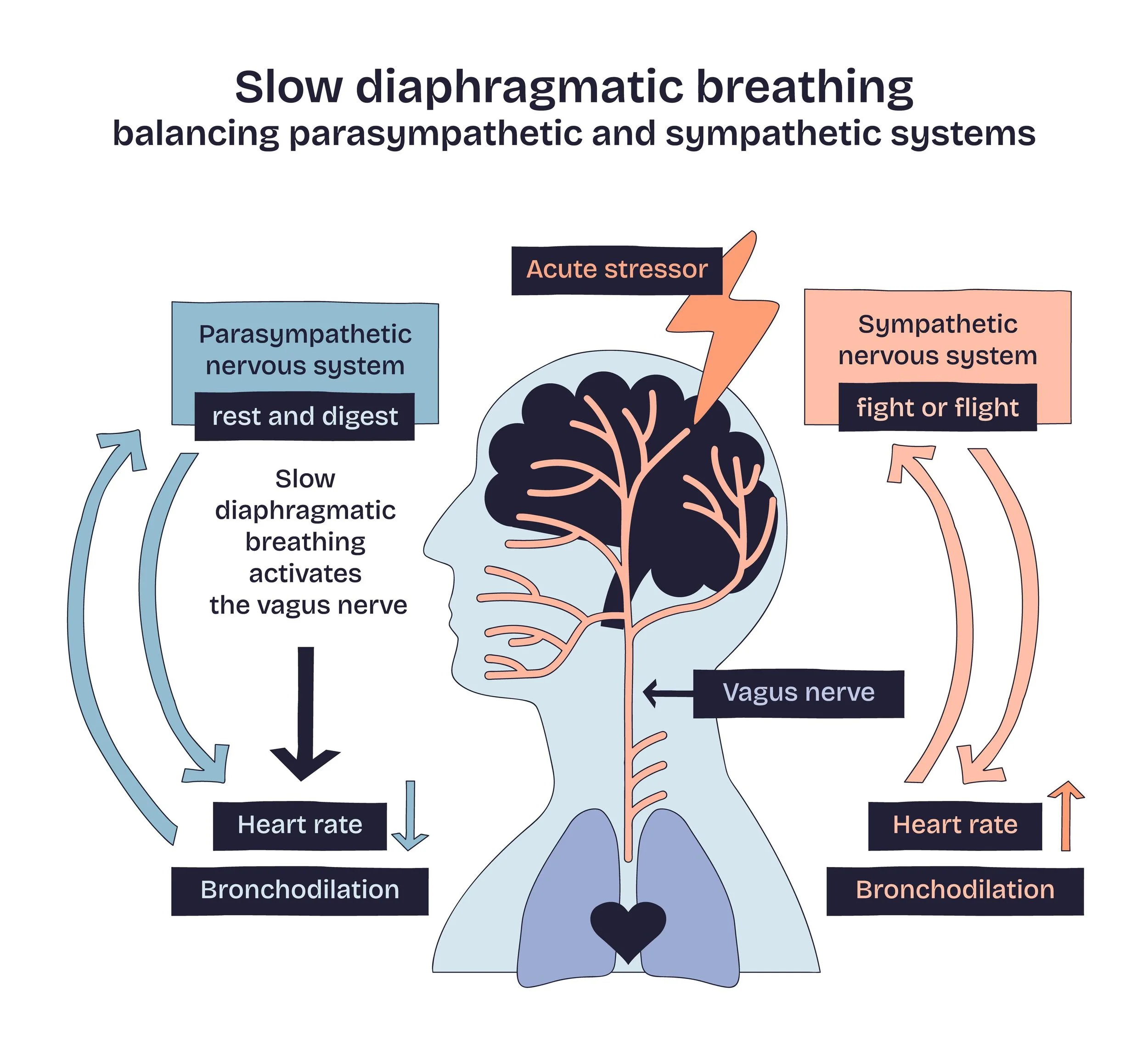
It operates through two primary branches:
Sympathetic Nervous System
This is your fight or flight response.
It activates when your body perceives stress or danger and prepares you to react.
Parasympathetic Nervous System
This is your rest and digest state.
It supports relaxation, healing, digestion, and recovery.
Many people today live in a chronic low level state of sympathetic activation.
This can show up as:
Anxiety or overwhelm
Difficulty relaxing
Poor sleep
Emotional reactivity
Chronic tension in the body
The key to healing is not eliminating stress, but learning how to regulate your nervous system and return to balance.
How the Breath Regulates the Nervous System
Your breath acts as a direct bridge to your nervous system.
When you change the way you breathe, you send signals to your body about whether it is safe or under threat.
Slow, Deep Breathing
Activates the parasympathetic nervous system
This helps:
Lower heart rate
Reduce stress hormones
Promote relaxation
Faster, Rhythmic Breathing
Activates the sympathetic nervous system
This can:
Increase energy
Bring suppressed emotions to the surface
Support release and activation
Practices like conscious connected breathwork intentionally move between these states to create a cycle of activation and release.
If you are new to this, read what is conscious connected breathwork to understand how this pattern works in practice.
The Role of the Vagus Nerve
One of the key players in nervous system regulation is the vagus nerve.
It connects the brain to major organs throughout the body and plays a central role in the parasympathetic nervous system.
Breathwork stimulates the vagus nerve, especially through:
Slow exhales
Deep diaphragmatic breathing
Vocal expression and sound
This is one reason why practices that combine breath and voice, such as Embodied Voice Breathwork®, can be so effective.
They support regulation not only through breathing, but through vibration and sound.
Why Breathwork Can Access Stored Emotions
The body stores stress and emotional experiences when they are not fully processed.
This is often referred to as somatic memory.
Breathwork works on this level by:
Increasing oxygen and energy flow
Activating the nervous system in a controlled way
Allowing the body to complete stress cycles
During sessions, this may look like:
Emotional release such as crying or laughter
Physical sensations like tingling or warmth
Spontaneous insights or memories
This is not random.
It is the body processing and releasing what has been held.
The Science Behind Breath Retention and Energy
In practices like Kundalini pranayama, breath retention plays an important role.
Holding the breath can:
Increase carbon dioxide tolerance
Improve oxygen efficiency in the body
Heighten awareness and focus
This creates a unique internal environment where both physiological and energetic changes can occur.
If you want to explore this more deeply, read Kundalini pranayama explained.
Why Consistency Matters
Like any form of training, the benefits of breathwork increase with consistency.
Over time, regular practice can:
Improve baseline nervous system regulation
Increase resilience to stress
Enhance emotional stability
Support long term mental clarity
This is why many people choose to deepen their practice through structured environments like breathwork training in Costa Rica, where they can fully immerse and integrate the work.
A Professional and Evidence Informed Approach
As breathwork continues to grow in popularity, it is important to distinguish between casual practice and professional facilitation.
I am a Certified Professional Breathwork Practitioner with over 400 hours of training through the Global Professional Breathwork Alliance, which is dedicated to maintaining high standards of safety, ethics, and professionalism in the field.
This foundation ensures that the practices taught within Embodied Voice Breathwork® are grounded not only in experience, but in responsible and informed facilitation.
Bridging Science and Experience
The science explains how breathwork works.
But the true understanding comes through experience.
When you feel your body shift from tension to relaxation
When your breath softens and your mind becomes clear
When emotions move and release without force
That is where the science becomes real.
Final Thoughts
Your breath is always with you.
It is one of the most accessible and powerful tools you have to regulate your nervous system and support your overall well being.
When used intentionally, it becomes more than just a function of survival.
It becomes a tool for healing, awareness, and transformation.
Related Articles
Explore our breathwork training in Costa Rica to begin your journey.

What Is Conscious Connected Breathwork? A Complete Beginner’s Guide
Learn what conscious connected breathwork is, how it works, and its benefits for emotional healing and nervous system regulation. A complete beginner guide.
Conscious Connected Breathwork is a powerful somatic practice to regulate your nervous system, release emotional blocks, and reconnect with your body through the breath.
If you have been hearing more about breathwork and wondering what makes conscious connected breathwork different, you are not alone.
This practice has become one of the most powerful tools for emotional healing, nervous system regulation, and personal transformation. Unlike traditional breathing exercises that focus on relaxation alone, conscious connected breathwork works on a deeper somatic level.
It helps you access stored emotions, shift long held patterns, and reconnect with your body in a direct and experiential way.
This guide will walk you through what conscious connected breathwork is, how it works, what to expect, and why so many people are choosing to train in this modality, especially through immersive experiences like breathwork training in Costa Rica.
What Is Conscious Connected Breathwork
Conscious connected breathwork is a continuous breathing technique where the inhale and exhale are linked together without pauses.
The breath flows in a rhythmic pattern, often through the mouth, creating a steady cycle that builds energy in the body.
This continuous breathing pattern allows you to bypass the analytical mind and access deeper layers of the nervous system and subconscious.
Over time, this can lead to emotional release, increased clarity, and a stronger connection to your inner awareness.
If you are exploring this work more deeply, you can also read our full guide on what is conscious connected breathwork and how it works, which expands on the foundations of this practice.
How It Works in the Body
The breath directly influences the nervous system.
When you consciously change your breathing pattern, you signal to your body that it is safe to release tension and stored stress.
During a session, conscious connected breathing can:
Activate the sympathetic nervous system, bringing suppressed emotions to the surface
Support release through sensation, movement, or sound
Transition into parasympathetic states, allowing deep relaxation and integration
This natural cycle of activation and release is what makes breathwork so effective for somatic healing.
Many people report experiencing emotional releases, physical sensations, or insights that feel difficult to access through thinking alone.
Benefits of Conscious Connected Breathwork
This practice works across multiple levels of your being.
Emotional Benefits
Releases stored emotions such as grief, anger, or anxiety
Increases emotional awareness and resilience
Supports trauma healing when practiced in a safe, guided space
Physical Benefits
Improves oxygen flow and circulation
Reduces tension held in the body
Supports nervous system regulation
Mental and Spiritual Benefits
Increases clarity and focus
Enhances intuition and self-awareness
Deepens connection to purpose and inner guidance
If you are interested in going beyond personal practice, you can explore the full path to become a breathwork facilitator in the Embodied Voice Breathwork Method.
What to Expect in a Session
A typical conscious connected breathwork session lasts between 45 to 90 minutes and is usually guided by a trained facilitator.
Here is what the experience often includes:
1. Opening and Intention Setting
You are guided to connect with your body and set a personal intention for the session.
2. Active Breathing Phase
You begin the continuous breathing pattern. Music is often used to support the journey.
During this phase, you may experience:
Tingling or energy moving through the body
Emotional release such as crying or laughter
Visual imagery or memories
3. Integration and Rest
The breath slows down and the body shifts into a deep state of relaxation. This is where insights and integration occur.
Is It Safe?
Conscious connected breathwork is a powerful practice and should be guided by a trained facilitator, especially for beginners.
A trauma informed space is essential to ensure that emotional releases are supported safely.
Certain conditions may require modifications, such as pregnancy, cardiovascular issues, or a history of severe trauma. This is why choosing a reputable training or facilitator matters.
At Embodied Voice Breathwork®, safety, nervous system awareness, and trauma informed facilitation are core elements of every training.
Why Train in Conscious Connected Breathwork
Many people begin breathwork for personal healing and then feel called to share it with others.
Training in this modality allows you to:
Deepen your own healing journey
Learn how to guide others safely and effectively
Integrate breathwork into your current career or start a new path
Facilitate sessions, workshops, or retreats
If you are considering this path, explore our breathwork certification benefits and facilitator training to understand what is possible.
Why Choose Costa Rica for Breathwork Training
There is something unique about learning breathwork in a place where nature is fully alive.
Costa Rica offers:
A deeply supportive and conscious community
Access to ocean, jungle, and natural elements
A slower pace that allows for true integration
An immersive environment free from daily distractions
Training here is not just about learning techniques. It becomes a full body experience of living the work.
You can explore our upcoming breathwork training in Costa Rica to see how this experience is structured.
Final Thoughts
Conscious connected breathwork is simple in technique but profound in its impact.
It invites you to return to something you already have, your breath, and use it as a gateway into healing, awareness, and transformation.
Whether you are just beginning or feeling called to go deeper, this work meets you exactly where you are.